
Introduction : Is a group of millions of stars.Together with gravity.Galaxies are generally very small in size.
It is believed that in the observable universe there are about one hundred billion galaxies.
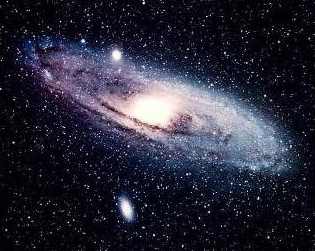
Body 1 : The galaxy the universe or the system of hundreds of thousands of stars is combined with many forces between the stars and supermassive black holes.Galaxy has many different shapes such as Spiral Galaxy , Milky Way Galaxy and Neighbor galaxy.
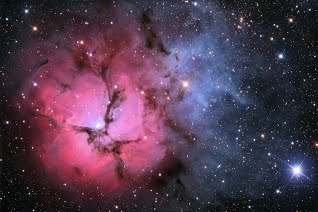
Nebula is a group of clouds of dust, gas and space.
Body 2 : Type of galaxy 1. The Milky Way is a phenomenon in the Earth’s atmosphere, such as clouds and fog. 2. Galaxy Turbine there is no dense bulge in the arm. 2.1. The galaxy Sb turbine has a big bloated part. Medium length sleeves. 3. Live together in groups or in clusters Astronomers call a group of galaxies and neighboring galaxies that Local Group.
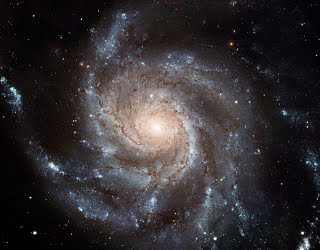
Body 3 : Nebula has a low temperature Because there is no heat source. Later, when the gas group is dense, the heat inside can not spread out.
The newly formed star has a temperature of around 25,000 K.
conclusion :
The galaxy the universe or the system of hundreds of thousands of stars is combined with many forces between the stars and supermassive black holes. Have type of galaxy. The newly formed star has a temperature of around 25,000 K.
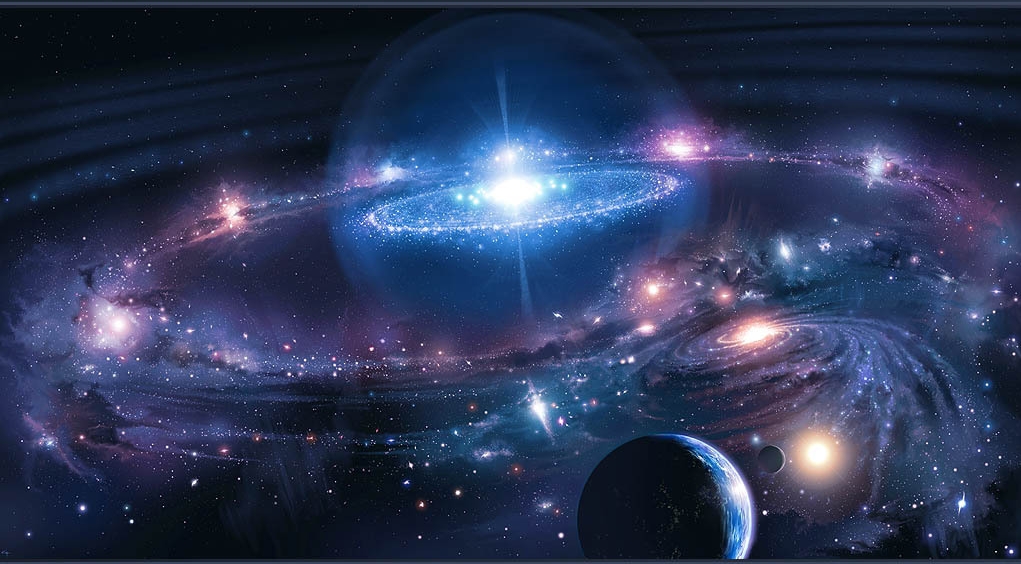
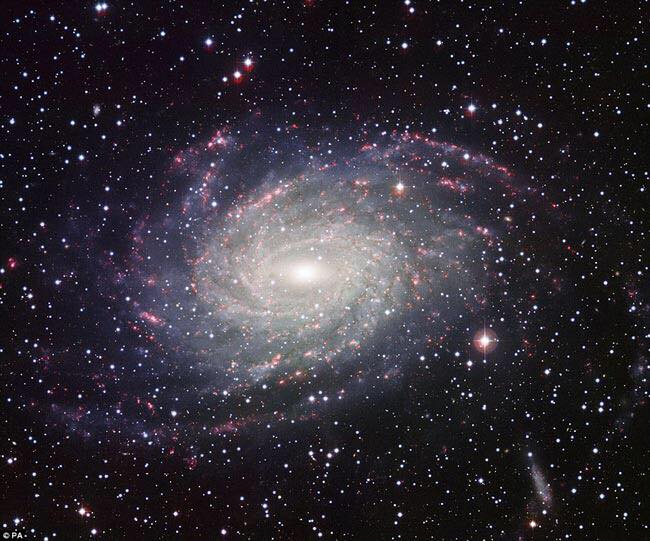
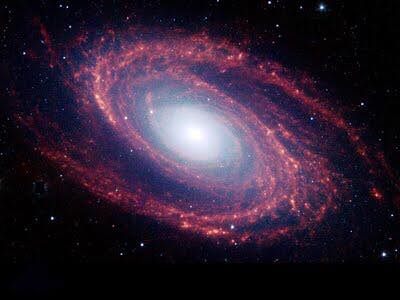
Introduction : The Milky Way is the galaxy that houses the solar system and our planet by looking at the sky appears to be the flightless a cloud of white light. This caused a lot of stars in the galaxies are disk-shaped. Previously, astronomers thought that the Milky Way galaxy, the elephant Allowance (The Milky Way Galaxy) is a spiral galaxy like. There are about a hundred billion stars, the total mass of about nine billion times the mass of the sun is divided into 3 parts.
Body1 : Disk contains the arms of the Galaxy. Have a diameter of about 100,000 light years thick approximately 1,000 – 2,000 years old light. There are approximately 400,000 million stars. The main element is the dust. A type of gas and the star population (Population I) which is much wider metal.
Body2 : Bulge is located in the Centre of the Galaxy. There are approximately 6,000 years have little gas and dust. The main element is the oldest part of the population and the population (Population II) which is the old star but there is a little metal.
Body3 : Halo a bulbous parts of galaxies are surrounded. The main component is the “globular cluster” (a Global Cluster) many individual clusters consist of stars millions of moons are the two types of population. Astronomers assumed that globular cluster as the old structure of galaxies because it orbits up and down through a bulging of the Galaxy.
Conclusion : The spiral arms of the Milky Way galaxy is composed of gas, dust and young stars, high-temperature spectrum O and B, which makes it look brighter blue than the surrounding area. Its spiral arms act like a whisk broom to gather stars, dust and gas together, causing density waves. Stimulate the formation of new stars.
Section 1 ID : 61109757 In the completion of GEN61-123 Academic Reading and writing Task
Introduction : A galactic clusters within a matter bulbous middle and sleeves around the arm band is in the same plane.When the parent side so it looks like the discs within the arms of those stars very age. Spiral arm revolves around the heart of the Galaxy with angular velocity constant.As the stars which is near the core of the galaxy return faster than the stars in the arm.
Body 1 : Galaxies subdivide turbines into 2 categories.Normal Spiral Galaxy is a spiral galaxy with a radial arm bulb flat and similar in each arm, but the density of galaxies is different.Barred Spiral Galaxy model turbines beamed to distant galaxies, have a similar structure beams down across the Middle galaxies. This beam will have an area of brightness of stars and matter exists
Body 2 : The structure of galaxies, there are 3 turbine model example.1)subshell. At the center of the Galactic density, most of the galaxies and 2) the dish The gas and dust group comprises a large part of the Galaxy, where the gas is mostly hydrogen and helium.3) Hard metallurgy or reduce. The territorial sphere Contain small amounts of gas, dust globular cluster dark matter.
Body 3 : Galaxies form are divided into two categories . Im galaxies a galaxy that occurred most frequently seen among the galaxies do not have patterns, and can show traces of distant galaxies haen, a spiral arm.2) IO galaxies Is there no Galaxy forms which occur randomly completely. This type of Galaxy is approximately 20% of the galaxies do not have all of the format.
Conclusion : Galaxies, each galaxy contains a supermassive black holes, neutron stars, the stars of the Moon, asteroids, comets, nebulae, dust and dark matter.Some galaxies may be large or small stars less than 1 million stars or more 1 million million.Astronomers estimate that the galaxy is likely to be 1 billion galaxies in the universe.
Name : Treechada Pakakeaw
Section 1 ID :61116232 In the completion of GEN61-123 Academic Reading and writing Task
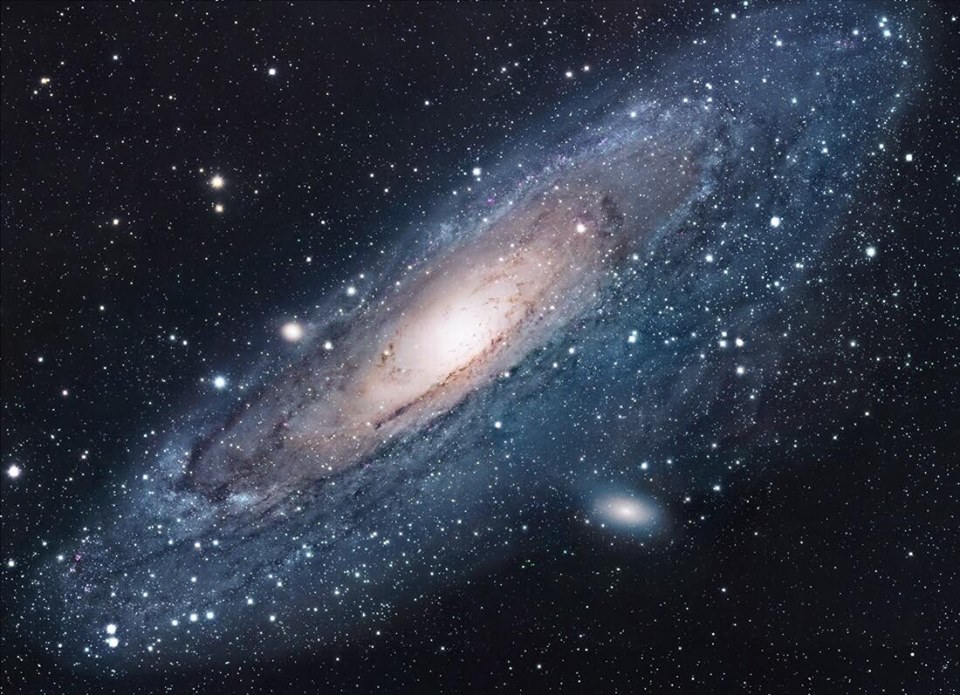
Introduction : Is a group of galaxies that are relatively small Consists of just over 30 galaxies, grouped together around 2 large galaxies. Andromeda galaxy (M31) and our Milky Way galaxy Our Milky Way Galaxy Is part of the Local Group, with a diameter of about 1Mpc (Mega parsec ~ 3,260,000 light-years) so it goes out of the area of the Local Group as an empty space Which rarely found any other galaxy The other closest galaxy is Virgo Cluster, about 18Mpc away.
Body1 : Other galaxies that are second in the Local Group are M33 (Triangulum galaxy), both the Milky Way galaxy. The Andromeda Galaxy and M33 are quite large galaxies. And the other galaxy in the Local Group is an elliptical and irregular galaxy (with an unstable shape) shining out a faint light. Only a small size Almost can be called a dwarf galaxy. Some galaxies are very small. Until it looks like a star cluster with the influence of gravity from each galaxy Causing many galaxies in the Local Group to move together in the universe Therefore, when examining spectroscopy Of these galaxies Therefore the appearance of the redshift in other galaxies is not found Far away In fact, people have noticed other galaxies in the Local Group for a long time (although they never knew it was another galaxy. Until less than 100 years ago) such as the Andromeda Galaxy Is recorded in the Persian star Since year 905 (Book of Fixed Stars, by Al Sufi .
Body2 : The Andromeda galaxy is about 2.2 million light years away. It looks like our Milky Way. But may be slightly larger And if observed well, will see that It has a small neighbor galaxy. The other two galaxies are M32 (NGC 221) and M110 (NGC 205).While the Andromeda Galaxy Is a spiral galaxy, which is round, flat like two plates There is a spiral arm protruding similar to our Milky Way galaxy, but the M32 and M110 look like an elliptical galaxy. At present, elliptical galaxies are more numerous than spiral galaxies.
Body3 : galaxy Andromeda Approaching our Milky Way galaxy With a speed of about 500,000 kilometers per hour Expected to touch each other in the next 3 billion years. If imagining the momentAndromeda Galaxy is in the Andromeda constellation. If you want to see the appearance Is a clearer white blemish May require binoculars Or telescope by Andromeda Will be the highest in the sky at about eight o’clock in October-November
Conclusion : Small Magellanic Clouds and Small and Large Clouds of Magellan are small galaxies. With a Irregular shape of the Milky Way satellite Because it can be seen Only from the southern hemisphere Therefore known among the star watchers The southern hemisphere for a long time But has just been recorded until it is known In 1519 By Captain Ferdinand Magellan, the naval leader, traveled around the world 400 years later. Henrietta Leavitt used this area of the Magellan cloud. So Study about Cepheid Variable, until we can use this variable star Measure a very long distance Between galaxies in the universe;
Name : Fa-is Benyusoh
Section 1 ID :61116711 In the completion of GEN61-123 Academic Reading and writing Task

 science